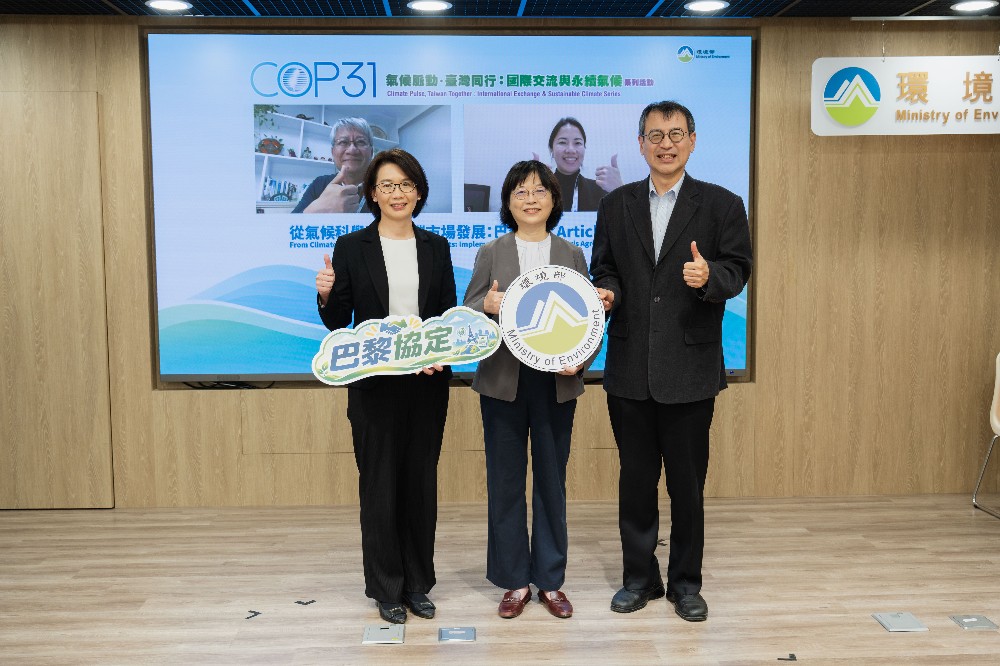
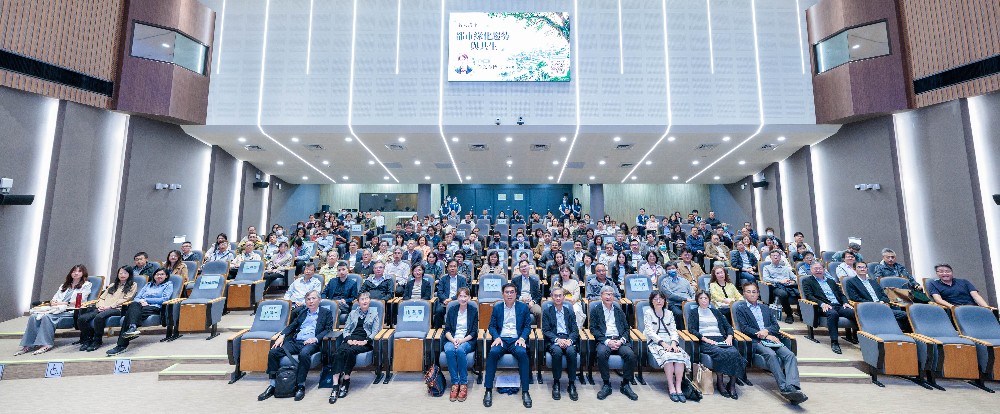
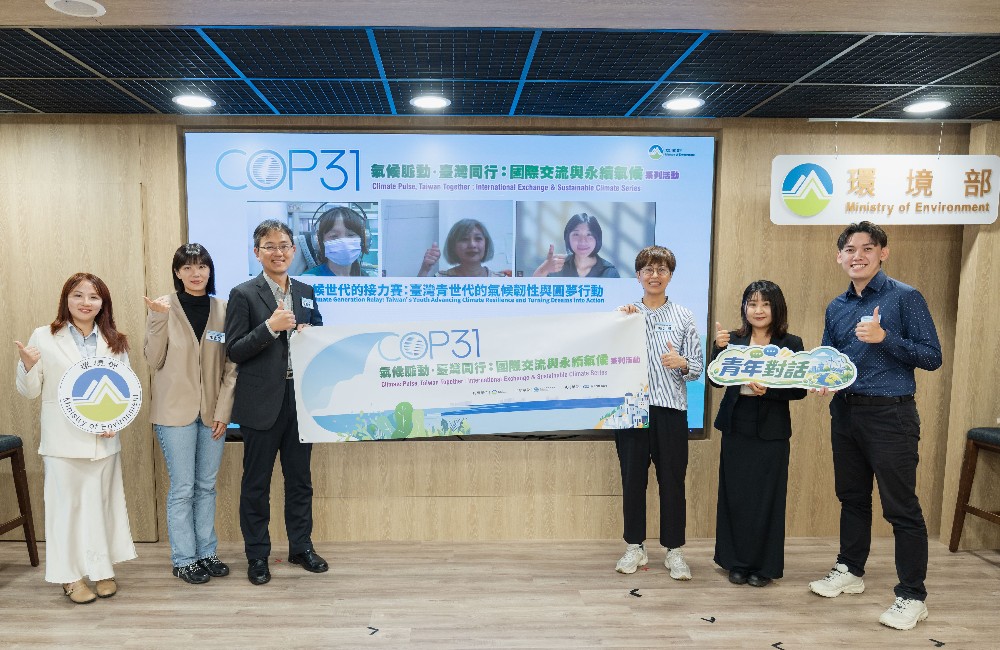
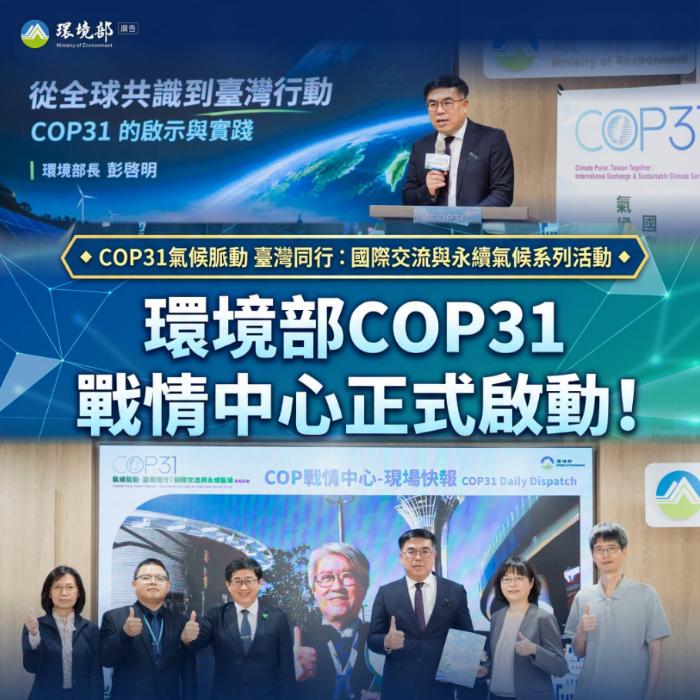
第31屆聯合國氣候變化綱要公約締約方大會(COP31)落幕,主辦國土耳其將「零廢棄」(Zero Waste)與循環經濟列為全球氣候行動的重要主題。環境部長彭啓明今(21)日表示,臺灣高度重視COP31所倡議的零廢棄與循環經濟方向,並將資源循環視為推動淨零轉型、強化資源安全及產業競爭力的重要策略。臺灣不僅將持續深化國內循環經濟政策,也願意分享多年累積的資源回收、技術創新及產業發展經驗,積極與國際夥伴合作,共同推動循環材料應用及跨境循環供應鏈,讓循環經濟成為全球氣候行動與綠色成長的新動力。
資源有限的島嶼經濟體:循環經濟是國家戰略
彭部長指出,臺灣是天然資源有限、產業高度發展的島嶼經濟體,原物料進口依賴度高達76.14%,卻擁有全球重要的半導體、電子及高科技製造產業,在全球供應鏈中扮演關鍵角色。面對國際資源供應風險、產業淨零轉型及綠色供應鏈要求,如何提高資源使用效率、降低原生材料依賴,並將廢棄資源轉化為高價值的循環材料,已成為臺灣產業永續發展的重要課題。
氣候行動不只是能源轉型,更要從資源循環著手
COP31主席國土耳其將循環經濟與零廢棄列為全球氣候行動的重要方向,並提出兩項2035年行動倡議:將全球廢棄物產生量的預期增幅減半,以及將製造及生產部門的循環材料使用率提高至至少15%。這代表全球氣候行動正從能源轉型,進一步延伸至資源使用、產品設計及產業生產模式的系統性轉型。彭部長表示:「這提醒我們,氣候行動不應只著重能源轉型,更需要從產品設計、材料使用及產業生產模式著手,減少資源消耗與碳排放。」
三十年累積成果:經濟成長與廢棄物產生量初步脫鉤
過去30年,臺灣逐步建立完善的廢棄物管理與資源回收體系。透過延伸生產者責任,以及全民參與的「四合一資源回收制度」,臺灣奠定了資源循環的基礎。2025 年,臺灣一般廢棄物回收率達 60.23%。更值得注意的是,2025 年臺灣經濟成長率達8.76%,一般廢棄物產生量卻減少 0.22%,是近十年來首次出現年度負成長。這是經濟成長與廢棄物產生量初步脫鉤的正面訊號。彭部長表示,臺灣已具備良好的循環經濟產業基礎,並積極推動循環產業升級與創新。臺灣希望透過技術創新、再生材料利用及跨產業合作,建立更完整的循環供應鏈,讓循環經濟不只是環境保護,更能創造新的市場需求、吸引投資,成為帶動經濟成長與提升產業競爭力的重要動力。
雙法改革:從末端處理走向產品全生命週期
為加速循環經濟轉型,臺灣在2026年推動《資源循環推動法》及《廢棄物清理法》雙法改革,將管理重點從末端廢棄物處理擴大到產品全生命週期,透過循環設計、再生材料、綠色採購及循環服務,建立更完整的資源循環體系。環境部強調,要讓循環經濟成為帶動經濟成長的新動能,關鍵在於讓循環產業能夠持續獲利、擴大規模,未來將從四大面向著手,一是擴大市場需求,透過綠色採購與循環服務,創造再生材料及循環產品的市場商機;二是提升產業獲利,促進跨產業合作與資源高值化,將循環轉化為企業競爭優勢;三是吸引資金投入,對接百億綠色成長基金,結合公私部門資金與創新育成資源,協助循環新創跨越商業化門檻;四是培育循環人才,整合產學研量能,強化循環設計、再生材料及資源管理等專業人才培育。透過法制改革與市場機制雙軌並進,推動循環產業成為臺灣綠色成長的重要引擎。
2050 循環經濟路徑圖:三大目標、六大重點領域
展望未來,臺灣已規劃 2050 循環經濟路徑圖,為持續推動資源循環確立長期方向。路徑圖以 2020 年為基準,提出三項長期目標:資源生產力提升至 2 倍、人均物質消費量減少 35%、投入端循環利用率提升至 2.5 倍。臺灣將透過提升資源使用效率、延長產品壽命及擴大再生材料利用,減少對原生資源的依賴,並創造更高的經濟價值。為落實上述目標,臺灣將聚焦生物質、塑膠、紡織、營建建築、能源設施與關鍵物料,以及高科技電子產品等六大重點領域,透過跨部會合作、技術創新與產業鏈整合,推動資源高值化利用,讓循環經濟成為帶動產業升級與淨零轉型的重要動力。
強化國際合作:攜手推動跨境循環供應鏈
彭部長強調:「沒有任何國家能夠獨自完成循環經濟轉型。」他表示,COP31 為各國提供交流政策、技術與實務經驗的重要機會。臺灣願意分享資源回收、科技創新與循環產業發展的經驗,並在此基礎上強化與國際夥伴的合作,共同推動循環材料應用、創新商業模式及跨境循環供應鏈發展。彭部長呼籲:「讓我們攜手把廢棄物轉化為資源,把資源循環轉化為產業競爭力,把循環經濟轉化為具體的氣候效益。」
Echoing COP31’s Zero Waste Theme, Taiwan Strengthens Circular Economy Cooperation with Countries Worldwide
The 31st Conference of the Parties to the United Nations Framework Convention on Climate Change (COP31) has concluded. Türkiye, the host country, made zero waste and the circular economy key themes of global climate action. Minister of Environment Peng Chi-Ming said today (November 21) that Taiwan attaches great importance to the zero waste and circular economy agenda advocated at COP31 and regards resource circulation as an important strategy for advancing the net-zero transition, strengthening resource security, and enhancing industrial competitiveness. Taiwan will not only continue to deepen its domestic circular economy policies but is also willing to share its accumulated experience in resource recycling, technological innovation, and industrial development. By actively collaborating with international partners, Taiwan aims to jointly advance the use of circular materials and cross-border circular supply chains, making the circular economy a new driver of global climate action and green growth.
A Resource-Limited Island Economy: The Circular Economy as a National Strategy
Minister Peng noted that Taiwan is an island economy with limited natural resources and highly developed industries. Despite its dependence on imports for 76.14% of its raw materials, Taiwan is home to globally important semiconductor, electronics, and high-tech manufacturing industries and plays a key role in global supply chains. Amid risks to international resource supplies, the net-zero transitions of industries, and green supply chain requirements, improving resource efficiency, reducing reliance on virgin materials, and converting waste resources into high-value circular materials have become important challenges for the sustainable development of Taiwan’s industries.
Climate Action Is More Than an Energy Transition: Resource Circulation Must Also Play a Role
Türkiye, the COP31 Presidency, has identified the circular economy and zero waste as important priorities for global climate action and proposed two action initiatives for 2035: halving the projected increase in global waste generation and raising the circular material use rate in the manufacturing and production sectors to at least 15%. This signals that global climate action is moving beyond the energy transition to encompass systemic changes in resource use, product design, and industrial production models. Minister Peng said, “This reminds us that climate action should not focus solely on the energy transition. We must also address product design, material use, and industrial production models to reduce resource consumption and carbon emissions.”
Thirty Years of Progress: Early Signs of Decoupling Economic Growth from Waste Generation
Over the past 30 years, Taiwan has gradually established a comprehensive waste management and resource recycling system. Through extended producer responsibility and the publicly supported Four-in-One Recycling Program, Taiwan has laid the foundation for resource circulation. In 2025, Taiwan’s municipal solid waste recycling rate reached 60.23%. Notably, while Taiwan’s economy grew by 8.76% in 2025, municipal solid waste generation declined by 0.22%, marking the first annual decline in nearly a decade. This is a positive early indication of decoupling between economic growth and waste generation. Minister Peng said that Taiwan already has a sound industrial foundation for the circular economy and is actively promoting the upgrading and innovation of circular industries. Through technological innovation, the use of recycled materials, and cross-industry cooperation, Taiwan hopes to establish more comprehensive circular supply chains so that the circular economy can go beyond environmental protection to create new market demand, attract investment, and become an important driver of economic growth and industrial competitiveness.
Minister Peng said Taiwan already has a strong industrial foundation for the circular economy and is actively promoting industrial upgrading and innovation in circular industries. Through technological innovation, the use of recycled materials, and cross-industry collaboration, Taiwan aims to build a more complete circular supply chain. The goal is for the circular economy to go beyond environmental protection: to create new market demand, attract investment, and become a key driver of economic growth and industrial competitiveness.
Dual Legislative Reform: From End-of-Pipe Treatment to the Full Product Life Cycle
To accelerate the transition to a circular economy, Taiwan is advancing dual legislative reform in 2026 through the Resource Circulation Promotion Act and the Waste Disposal Act, expanding the focus of management from end-of-pipe waste treatment to the entire product life cycle. Through circular design, recycled materials, green procurement, and circular services, Taiwan aims to establish a more comprehensive resource circulation system. The Ministry of Environment emphasized that, for the circular economy to become a new engine of economic growth, circular industries must be able to generate sustainable profits and scale up. The Ministry will therefore pursue four approaches. First, it will expand market demand through green procurement and circular services, creating market opportunities for recycled materials and circular products. Second, it will improve industry profitability by promoting cross-industry cooperation and higher-value resource utilization, turning resource circulation into a competitive advantage for businesses. Third, it will attract investment by linking circular industries with the NT$10 billion Green Growth Fund and combining public and private financing with innovation incubation resources to help circular startups overcome barriers to commercialization. Fourth, it will cultivate circular economy talent by integrating the capabilities of industry, academia, and research institutions and strengthening professional training in circular design, recycled materials, and resource management. By advancing legislative reform and market mechanisms in parallel, Taiwan aims to make circular industries an important engine of green growth.
2050 Circular Economy Roadmap: Three Goals and Six Priority Areas
Looking ahead, Taiwan has developed a 2050 Circular Economy Roadmap to establish long-term directions for advancing resource circulation. Using 2020 as the baseline, the roadmap sets three long-term goals: doubling resource productivity, reducing per capita material consumption by 35%, and increasing the circular material input rate to 2.5 times its baseline level. By improving resource efficiency, extending product lifespans, and expanding the use of recycled materials, Taiwan aims to reduce reliance on virgin resources while creating greater economic value. To achieve these goals, Taiwan will focus on six priority areas: biomass, plastics, textiles, construction and buildings, energy facilities and critical materials, and high-tech electronic products. Through interministerial cooperation, technological innovation, and industrial supply chain integration, Taiwan will promote higher-value resource utilization and make the circular economy an important driver of industrial upgrading and the net-zero transition.
Strengthening International Cooperation: Advancing Cross-Border Circular Supply Chains Together
Minister Peng emphasized, “No country can complete the transition to a circular economy alone.” He said COP31 offers an important opportunity for countries to exchange policies, technologies, and practical experience. Taiwan is willing to share its experience in resource recycling, technological innovation, and circular industry development and, on this basis, strengthen cooperation with international partners. Together, they can advance the use of circular materials, innovative business models, and the development of cross-border circular supply chains. Minister Peng called for joint action: “Let us work together to turn waste into resources, resource circulation into industrial competitiveness, and the circular economy into tangible climate benefits.”